
The life and times of Major General Joseph Spencer

By David DeLucia
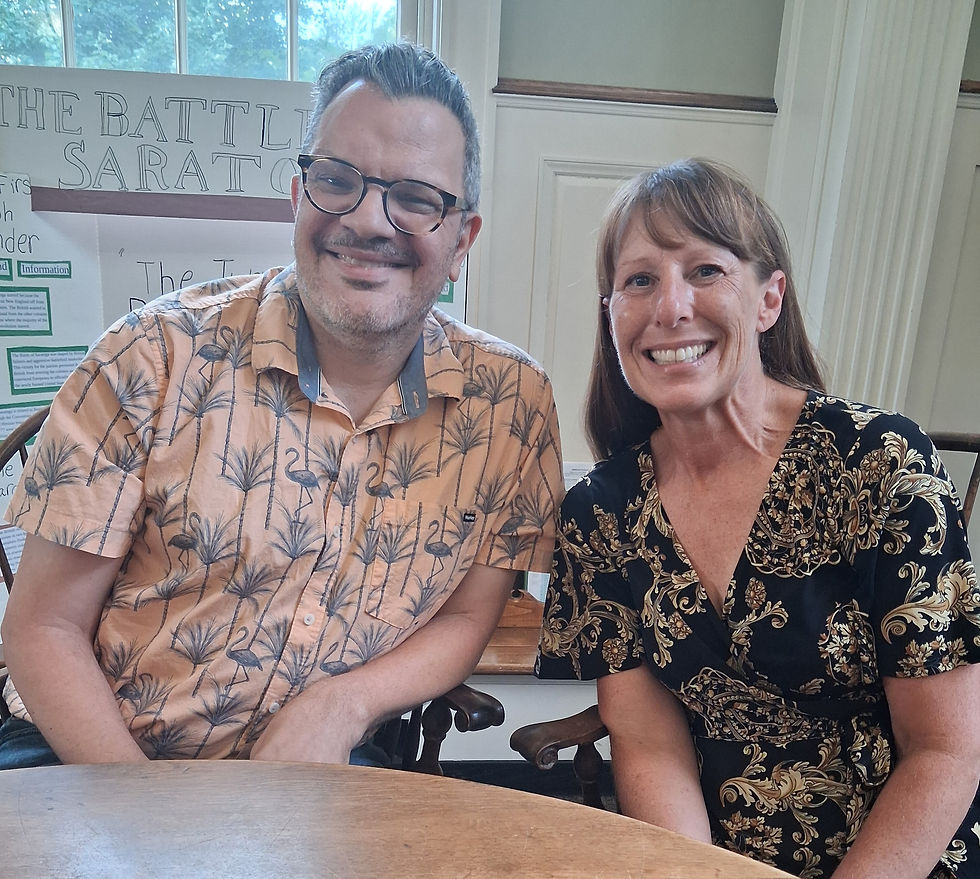
The East Haddam Historical Society Museum is planning a series of summer presentations on local historical figures. On June 28, speaker Alison Guinness expertly recreated the long life of Joseph Spencer (1714-1789) to an appreciative audience. Guinness, who wrote her master's thesis on the Moodus Noises, portrayed herself as Spencer and was both convincing and informative.
One of the oldest structures in East Haddam is the William Spencer House on Town Street. William was Joseph's father and he gave him 125 acres in the Millington area of town to create his own abode. Joseph Spencer first married Martha Brainerd, who unfortunately passed away in 1754. Just two years later Spencer married Hannah Brown Southmaid, who outlived him by nearly 20 years.
Depending on the source, he had either 13 or 14 children, but who's counting? Ironically, Spencer was hardly ever at home being initially very active as a church deacon. He also was involved from a relatively young age in military events such as the French and Indian War (1758-59) and the Proclamation of 1763.
The British were becoming an increasingly hostile treat to the new American Colonies in the 1760s yet a certain East Haddam resident Dr. Abner Beebe spoke in favor of the royal English government.
He was brutally “tarred and feathered” - hot pitch blistered his body, and he was rubbed with hog dung. In addition, windows were broken in his house and the millstone from his gristmill was taken by the Sons Of Liberty and thrown into the waterfall at Devil's Hopyard.
Abner appealed to Spencer for help, leading his friend to write an impassioned letter to Governor Jonathan Trumbull. However, he did not respond, and Spencer realized there was essentially nothing he could do. Interestingly enough, the ill-fated millstone was eventually recovered and is now on display at the Smithsonian Institution.
April of 1775 represented the opening phase of the Revolutionary War. At this point, Spencer had risen to the rank of Brigadier General and had a prominent role in the Siege of Boston representing the 2nd Connecticut Regiment. Spencer was responsible for guarding the Roxbury part of Boston. During the very bloody Battle of Bunker Hill the American patriots technically lost, yet many British soldiers were killed in the melee, approximately 1,160 compared to 460 Americans. Ultimately, after 11 months the British abandoned Boston, and regrouped in Nova Scotia.
In September of 1777, Spencer worked with Benedict Arnold to command 9,000 Continental soldiers in the so-called Spencer Expedition. The British had overrun Newport, Rhode Island and needed to be ousted. Both Arnold and Spencer appealed to George Washington for more reinforcements, but he was not receptive to their pleas.
Ultimately heavy rain and wind further limited the Continental Militia's effectiveness, causing Spencer to abort the mission and resign on January 14, 1778. Although he was censored by the Continental Congress in 1779, he was eventually exonerated and returned to the Congress as a delegate. He also became a judge at the Connecticut Supreme Court of Errors and served in that capacity until his death in 1789.
Guinness ended her talk by mentioning that a monument was erected in Nathan Hale Park to celebrate Joseph Spencer. Although Spencer and his second wife had originally been buried in Millington Cemetery, they were reinterred to be nearer to the actual monument.
After the talk, refreshments were served and Guinness was available to answer questions. The next presentation was slated for July 12 and featured the life and times of Nathan Hale.

Comments